Best Otolaryngology/ENT EMR Software Buyer's Guide 2026

Mike Garcia
Jan 30, 2026
245
Mike Garcia
Physicians who work in Otolaryngology treat a wide variety of patients, from children with ear infections to adults with sinus issues, hearing loss, or head and neck conditions. They may also perform complex surgeries such as sinus surgery, sleep apnea treatments, or head and neck cancer surgeries. It’s also the oldest medical specialty practiced in the US.
Given the diversity of patient needs, an Otolaryngology/ENT practice should choose Electronic Medical Records (EMR) software that is tailored to their specific requirements, including features like customizable workflows, otolaryngology-specific SOAP notes, and specialized templates.
To understand how an EMR software solution will work for you, you should check what features and functionality it offers. Before choosing an Otolaryngology (ENT) EMR software, you should check if it has the following features:
Template Notes – SOAP notes designed especially for otolaryngology are customizable so physicians can personalize them according to their needs. These templates should be relevant to otolaryngology and cover areas such as:
ICD/CPT Codes – ENT EMR Software should streamline the coding process by including ENT-specific ICD-10 diagnosis codes and CPT procedural codes. These codes should be relevant to common ENT procedures such as audiograms, endoscopies, tympanoplasty, and tonsillectomy. This ensures accurate documentation, claims, easier billing, and an overall faster process that improves practice efficiency.
Workflow Management – ENT practices generate large volumes of patient data, ranging from audiology test results to imaging scans and allergy test records. Your EHR software should efficiently manage and document these ENT-related workflows. Having ENT EMR software that handles patient history, test results, treatment plans, and follow-ups ensures smooth operations and better clinical decision-making.
Equipment Integration – A key feature of ENT Electronic Medical Records (EMR) Software is its ability to integrate with the various diagnostic devices used in otolaryngology. These devices might include:
This integration ensures that data is automatically captured and stored within a patient’s EMR, reducing manual entry and improving accuracy.
Lab Interface – Otolaryngology often requires lab testing, such as allergy tests or infectious disease panels. Your Otolaryngology EHR software should include a built-in lab interface for seamless results retrieval and test tracking. In addition to labs, integration with imaging systems (e.g., CT scans of the sinuses) can further enhance diagnostic capabilities.
Real-time Dashboard – The best Otolaryngology (ENT) EMR software solution should feature a real-time dashboard that will provide a summarized view of patient charts, profiles, billing processes, scheduling, etc. all in one place. This dashboard should also provide quick access to audiology reports, allergy test results, and imaging scans, allowing physicians to efficiently manage patient care.
Allergy and Medication Management – Many ENT conditions are linked to allergies, so your ENT EHR Software should include comprehensive allergy management features. This should involve allergy testing integration, immunotherapy tracking, and alerts for potential drug-allergy interactions. The ability to share information with other specialists, such as immunologists, through secure messaging or interoperable platforms is essential for coordinated care.
Sleep Studies – ENT specialists frequently treat sleep disorders such as sleep apnea and snoring. ENT EHR Software should offer templates for tracking sleep study results and managing treatment plans, including CPAP therapy and surgical interventions. Having these features in place can help streamline the management of sleep apnea, UPPP surgery, and related conditions.
Countless Otolaryngology EHR software vendors provide the software you need. To narrow the selection down to those that fulfill your requirements as a medical practice, as well as a specialty, you need to keep a few things in mind:
Size – Some vendors cater better to large practices while some are best suited to smaller ones. EMR software is designed keeping a certain number of users, scalability, and support required in mind. When selecting a vendor, keep in mind the size of your practice.
System Design - The choice is between installing the software on an on-site computer server or using a cloud-based solution accessible from anywhere with an internet connection. This can be based on several factors like cost, security, accessibility, and maintenance. While some practices prefer onsite systems for perceived control over HIPAA compliance, modern cloud-based solutions are often more secure and easier to maintain. Consider whether your practice needs access from multiple locations, has reliable internet, or prefers lower upfront costs versus long-term maintenance.
Certification – It’s essential to ensure the EHR software you choose is certified, particularly for specialty practices like otolaryngology. Look for certification by the ONC-Authorized Testing and Certification Bodies (ONC-ATCB). This certification ensures that the Otolaryngology EHR software meets Meaningful Use criteria, which are designed to improve patient care through the proper use of certified EHR technology. It also indicates that the software complies with HIPAA regulations, which are critical for protecting patient data.
Electronic Medical Records (EMR) Software or commonly referred to as EHR Software represents the electronic method of storing medical records for patients. Using specially designed software, physicians and other medical professionals can store anything ranging from patient demographics to extensive clinical information about patients, such as medical history, social history, lab reports and more.
Since all medical providers (MDs, DOs, PAs, NPs, LCSW, OT etc.) work in a distinct manner based on their background and medical specialty, EMR Software or EHR Software must accommodate the unique style and documentation requirements. Examples of such specialty-specific features include the ability to annotate on images or capability to store before/after photos for Pain Management specialists and Dermatology specialists respectively. Similarly, other specialties such as Pediatrics, Oncology, Podiatry, Ophthalmology, Neurology, Nephrology, Dialysis Centers, Rheumatology and Chiropractic Care require their unique set of specialty-specific features to simplify adoption.
Since the introduction of the HITECH Act, healthcare IT has undergone a massive transition starting from the widely recognized Meaningful Use program to what is now known as MACRA, the Medicare EHR Incentive Program. The Meaningful Use program has transformed and now formed part of the four components of the new Merit-Based Incentive Payment System (MIPS), which itself is a fundamental part of MACRA.
For some medical practices, the transition from paper-based records to EMR Software (Electronic Medical Records Software) has not been a simple one. Regardless, realizing that the benefits of utilizing ONC Certified EMR Software far outweigh the hassle and challenges associated with it - ensuring a viable future, most practices today, have successfully transformed their clinical and administrative operations to EMR Software.
Aside from ensuring tangible financial incentives and profitability, practices converting to EMR / EHR Software have seen the following benefits:
Just like a medical specialty, EHR Software requirements also depend on the size of the medical practice. From solo provider clinics to large multi-provider, multi-specialty clinics, every practice has unique inherent challenges that must be addressed by the EMR Software vendor.
A small doctor’s office not only has a limited number of staff members but their EMR Software budgets are also extremely low compared to a large enterprise such as a hospital. Due to these budgetary constraints, many providers simply choose to employ Free EMR Software or choose an affordable EHR Software vendor with a low fixed monthly fee. Cloud-based access is one such important requirement so that these providers can access patient charts even from home when needed.
These practices usually consist of 5 to 10 medical providers often belonging to the same medical specialty. Their requirements are more stringent, while their budget is also considerably large. Aside from specialty-focused requirements (EMR Software by Specialty), these practices also require unique features such as interoperability, dedicated customer support, multi-device support as well as extensive reporting functionality to keep an eye on the overall performance of the practice.
Larger group practices generally comprise more fifteen or often twenty medical providers. These practices usually provide medical services that fall under various medical specialties (Orthopedics, Pain Management, Surgery, Chiropractic Medicine, Family Medicine etc.). Therefore, these practices require support for multiple users to access the system simultaneously, as well as for the Scheduling EMR software to accommodate multiple locations, providers and resources such as Dialysis Chairs, procedure room allocation etc. These practices also keep replacing or adding staff members and need a scalable solution.
EHR software companies such as Epic, Cerner, AllScripts, NextGen, athenahealth, Meditab by IMS, eClinicalWorks, Meditech, McKesson, MEDHOST etc. usually target and provide solutions for larger corporations like Hospitals, ACOs, PCMH, IPAs, CINs (Clinically Integrated Networks), Public Health Departments etc.
These customers have the most elaborate list of requirements, which are usually documented in the form of an RFI or RFP to assess and shortlist vendors that can meet them. The requirements consist of features like inventory management modules, interface with local labs (LIS), machines and diagnostic equipment along with drug dispensing (pharmacy management software) and electronic medication administration records (EMAR) etc.
These entities also require the EHR software also need to integrate with multiple other software and medical devices.
Since the introduction of Meaningful Use (MU), most healthcare practices simply have little or no choice but to convert their practice operations to an EMR software. However, most providers today select the EHR software of their choice that best suits their specific needs and must perform an extensive search to evaluate all available options before they find one that is suitable. Most potential EHR Software buyers in the market today have the following in common:
Although #3 is ideal, every provider and practice workflows are unique and therefore what works for one provider may not suit the other. “One size fits all” simply doesn’t apply in the world of healthcare IT. Software experts and industry specialists are an ideal source of information, advice and ultimately ensuring that the right decision is made.
EMR software includes several types of software based on specific applications or functionalities:
Small doctor offices benefit the most from Cloud-based EMR Software technology since minimum to no upfront cost or maintenance is required and accessing the EHR Software is possible from any location given the availability of internet access. This type of EMR software is also device independent in most cases and can be accessed using devices such as Smartphones (Android & iOS), iPhones, iPads, laptops, and desktop computers. The move to the public cloud for healthcare is vital in the current changing landscape. For practices that don't adopt new cloud services, the old inferior feature-set coupled with the higher prices will hinder the business dramatically. This gulf between the old software and the new cloud-based software will only grow more exponentially as time goes on.
Apple dominates the digital device and computers market in the US today, so it is no surprise that many providers are specifically looking for their EHR Software vendor to support Mac operating system (Mac EMR Software). Not all EMR systems today work on a Mac device, so looking for a vendor with native support for Mac devices is essential to ensure that the software performs on existing hardware at the practice and does not require more investment in computer systems.
This is the most significant requirement for most software buyers today as the software must comply with the standards and guidelines set by the Office of the National Coordinator (ONC). Online repository details all software vendors and details related to their respective compliance with the measures set by the ONC (Click here). Software that complies with these standards have undergone rigorous testing and confirmed at a benchmark level defined by the federal body. The software testing done during this exercise checks all areas of the EMR Software system from Patient Portal access to the way the EHR Software communicates with other programs and entities like labs, Pharmacies (via eRx), hospitals, HIEs etc.
Electronic Health Records (EHR) software for certain specialties such as ENT care, internal medicine, surgery center, family medicine, pain management must provide unique tools to document the clinical workflow of those specialists such as specifying the area of concern (for example jaw pain) and should provide more than a mere method of capturing text or raw data.
With competition rising in healthcare IT, EMR software providing integrated Practice Management software (PM software) as part of their overall software package easily outperform rivals with standalone EHR Software including those that may provide a specialty-specific EHR software. EMR Software companies with integrated Practice Management solutions often tend to provide extensive reporting capabilities to track practice performance and manage the business operations better.
Medical practice has several needs of software systems to streamline operations across the board. One such important area is billing for services rendered and communications with insurance companies. Medical Billing Software, therefore, works best when integrated with the Electronic Health Records software. All clinical documentation seamlessly conforms to the required standard and forms a financial document that can be electronically sent to payers (insurance carriers) to verify and process at their end. This simplifies the operations and ensures all parties are on the same page when it comes to the financial health of the enterprise. Medical billing software helps practices and medical billing managers generate claims, patient statements, verify patient eligibility and more. This software is ideal for practices who want to handle billing in-house and can integrate with EMRs.
An EMR Software must ensure the security and safety of patient records while ensuring privacy and HIPAA compliance for patient/doctor communication (Patient Portal). This is a paramount concern for physicians and HIPAA compliance should be guaranteed at all times by the EHR software vendor. Most Vendors today (Epic, Cerner, Athenahealth, AdvancedMD, PrognoCIS, Modernizing Medicine, eClincalWorks etc.) are aware of the importance of HIPAA compliance and have taken steps to ensure the safety of patient records security in every section of the EHR Software using advanced tools like data encryption technologies to enhance the security of the EMR software.
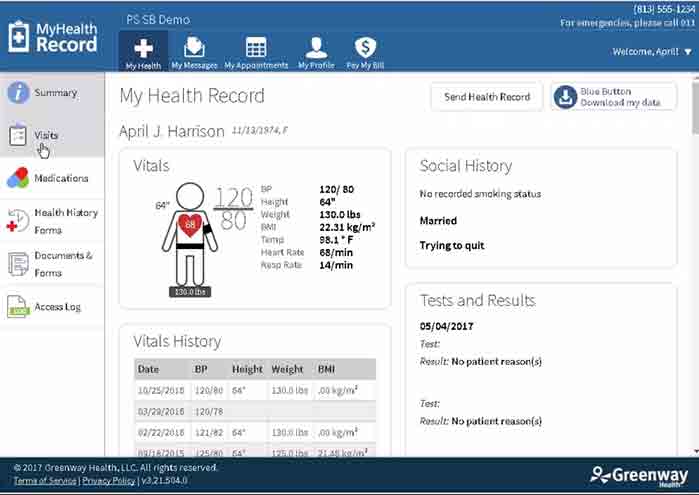
One of the decisions your practice will have to make is whether you want just an EMR software or one with an integrated Practice Management sooftware for billing and scheduling. There are advantages to having both together but there have been cases where some practices only go for one if they had unique requirements that a vendor could not fulfill, or they had already paid a hefty amount for a PM software and weren't looking to replace it yet.
Doctors are not IT professionals, and though some might be tech savvy, it would be egregious to expect them all to be experts on the EMR software. Ease of use is essential to make the transition from paper to electronic smooth, as well as day to day practice to go along without a hitch. If the software is too complicated and hard to understand, it's a waste of precious time and needlessly aggravating. Some vendors offer free training while others don't; make sure you ask for training if your practice needs it.
Not all specialties are created equal, so why must their software be generic? Basic EHR software works well and good for general practice and most specialties, but doctors have complained about specialty specific not being available in the market. The specialty software's have inbuilt recording systems that make specialty practices functioned efficiently. Only a few vendors provide specialty-specific software, so there aren't many to choose from. But the more vendors are cottoning on to the demand and there should be more options in the near future.
Support is a major issue most practices have with their current vendors. A good support team can make small glitches to major roadblocks easy to maneuver while a bad one will just make things worse. Some vendors provide support as part of the plan you're already paying for, while others charge extra for support. Scout the market, read reviews or just ask point blank if there will be a special support team assigned to each practitioner and whether you'll be charged for the service.
There are varying price lists out there, some offer free services, while others charge an arm and a leg for specialty services. Either way there will be hidden costs that you might get to know about later. Fix your budget and talk to the EMR software vendors you interview about hidden costs within the contract and whether services such as training and support are free.
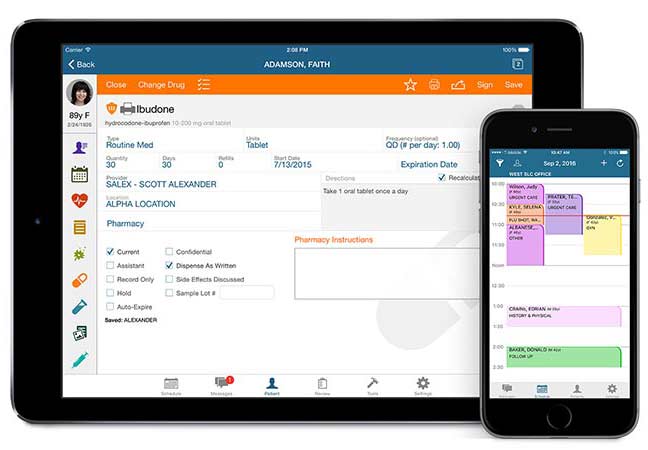
Smartphones have changed the dynamics of mobile usage. Handheld devices are easy to carry around and can be used for any number of uses. Most people are ditching the cumbersome PC for a handheld device. Doctors mostly use iPads or Tablets in the examination room to take down patient symptoms, check history and note down the prescription, so it's imperative that the vendor has a mobile application that is synced with all the mobile devices being used in the practice.
Like anything else, the EMR software industry is also subject to constant changes. From new technology to legalities and governing bodies, everything is constantly changing. Here are some trends that might be helpful to keep track of:
The Medicare Access and CHIP Reauthorization Act (MACRA) of 2015 introduced the Quality Payment Program (QPP) for eligible clinicians. Its goals are to shift Medicare payments toward rewarding quality and value in care.
Key Features of MACRA include:
Since 2018, Meaningful Use has been redefined as “Promoting Interoperability”. It’s one of the four performance categories in MIPS alongside three others:
Note: Eligible hospitals and CAHs participate in a separate Promoting Interoperability program with different requirements.
There’s been a shift towards effective healthcare data interoperability within EHR systems, ensuring that information is properly shared between healthcare and public health partners. Additionally, the CMS published its 2025 policy changes in December 2024, outlining new quality measures and changes to cost scoring methodology. Some key changes include:
Cloud-based EMR software solutions are a huge part of the EMR software industry. Interestingly, subscription models have also become the new norm, and perpetual licenses are increasingly rare.
Studies in the past have shown that roughly 25% of clinicians have shown interest in cloud-based EMR software systems, whilst 50% started with a basic setup that later evolved into a cloud model. Today, that number is significantly higher because of the various advantages it offers.
Cloud-based EMR software systems offer great benefits such as reduced costs, no hardware/software maintenance, great felxibilty, reliable accessibility, easier updates and many more. Regardless, there are always downsides to consider before deciding on a cloud-based EHR software solution.
It’s expected that between 2023 and 2030, the Electronic Medical Records (EMR) software industry will experience big changes and growth. Estimates show the market size growing from $31.22B to $40.05B in 2028. In addition, the market for cloud-based EHR solutions should grow greatly due to its low installation costs, ease of maintenance, and easy accessibility. The EMR/EHR system market in North America is expected to continue growing, as well as in emerging economies in the Asia-Pacific region, as they continue to undergo increased industrialization and urbanization.
Many EMR software vendors are quickly widening their range of practice types to become accessible to a wider range of healthcare services. The number of people lacking the time and knowledge in health IT is increasing yearly. This makes optimizing these EHR software solutions more difficult as they must now cater to different needs. Douglas W. Bowerman, MD, predicts we will see a “continued trend towards accessibility” in EHR software, both in terms of how we access them – on mobile, for instance – and who can access the software.
Medical practices and healthcare facilities generate huge amounts of patient data. This data aids clinicians and medical practitioners in clinical decisions (CDS) and by utilizing analytic algorithms in Electronic Health Records (EHR) software, interoperability-related accessibility issues can also be solved. The development of data warehouses can also provide an opportunity to ensure the accuracy of patient information due to automation.
Most notably used in cryptocurrency and NFTs, the use of blockchain technology within Electronic Medical Records (EMR) systems is also being explored and investigated. The technology uses cryptography to secure data stored in EMR/EHR systems and ensures that it can only be accessed with proper authorization. This could even be used to validate information such as clinical trials, track medicine distribution, and prevent insurance fraud. Starting from 2016, blockchain technology has already been implemented in research, development, or pilot programs.
5G networking is set to become a standard of data communication technologies in the next few years. 5G may not be able to completely integrate with health IT software, despite even offering up to 100 times the speed of ordinary 4G networks. There are still many different mediums of data transfer all of which are already competing to standardize EHR software communication. Due to this, many Electronic Health Records software solutions use different communication methods, making them incompatible and unable to communicate with each other. Therefore, despite its promises, 5G networks will be unable to get past this bottleneck until there is an agreed standard.
Currently, Electronic Medical Records software solutions are regulated by standards that are very lax. Due to this, some Electronic Health Records software vendors have had to pay millions of dollars in settlement fees, regarding false claims about meaningful use certifications. Regulations, for electronic medical records, are becoming far more strict and more transparent, to prevent such incidents in the future. Medical billing coders will likely use separate interfaces from physicians as they both require unrelated data, so sharing the same regulations would likely lead to life-threatening miscommunication.
The growth of your practice can be benefited greatly by boosting patient engagement. One approach can be to make resources and content available within patient communities. Another can be to increase patient outreach. Additionally, regular appointment reminders (handled via Appointment Reminder EMR Software) can reduce cancellations and improve patient engagement.
The Electronic Medical Records (EMR) Software industry is constantly influenced by technological developments. A common example is the addition of AI Virtual Assistants to EMR/EHR software solutions, which can assist practitioners with daily tasks and increase practice efficiency. With industry leaders like Apple and Google looking to enter the healthcare IT space, more competition between EMR software vendors can be expected. This will likely lead to the rapid modernization of EHR systems and large-scale updates.
Whilst better patient access is expected of many EHR software solutions, the feature has not yet been completely integrated. According to a 2019 study, only 10% of patients (who had access to their records) viewed them. Additionally, of these patients, 63% were encouraged to do so by their respective providers. Electronic Medical Records (EMR) software vendors are updating their systems to be easier to navigate and to better suit patients’ requirements; this also prepares EMR systems for potential future regulatory changes. More health practices are also providing more guidance and raising awareness to encourage more patients to regularly check their health records before appointments.
EHR software must include a wide range of features and functionalities. By working towards better data liquidity, data would be more accessible and therefore increase the EHR footprint, which can be done without compromising on security. Additionally, implementing interoperable EMR systems would also allow better access and exchange of patient information between healthcare organizations.
Artificial intelligence and machine learning are likely to have a significant impact on healthcare IT and EMR/EHR software systems, just as they have in most industries.
AI and machine learning and easily improve EHR software systems. Already, we’ve seen new features such as virtual assistants and voice recognition/transcription; however, there are other ways it can streamline medical workflows. For example, they could identify potential health issues early via predictive analytics.
By readily providing insights into such huge amounts of patient data, AI and machine learning can easily revolutionize clinical research and drug development.
Digital therapeutic software uses different methods to help treat patients and medical conditions. It’s typically used via mobile devices (i.e. smartphones and tablets) and is beginning to integrate into more EHR software solutions and become more patient-centric. The popularity of digital therapeutics can only be expected to rise as they start to meet industry requirements and clinical trials continue to be published.
Most Electronic Medical Records (EMR) Software improves accuracy and efficiency, but human error is not completely eradicated. Error prevention is something that is not currently addressed properly in EMR and EHR software. In previous years, it was common to blame handwriting for inaccurate paper prescriptions; however, even with healthcare IT solutions, relying too much on them can be dangerous. In one instance, a 16-year-old patient was prescribed 38 tablets of medicine (in 2013), which resulted in an overdose. Currently, Electronic Health Records (EHR) Software developers are developing solutions, such as decluttering physician notification centers to allow more time to be spent with patients and reduce distractions.
Presently with Electronic Health Records (EHR) software, easily processing large amounts of data can be a huge hassle. Current EHR systems still seem behind and dated, in terms of UI and ease of use. However, this is beginning to change as EMR vendors are beginning to update UIs in their EMR software solutions, to facilitate better and easier data access to EHR software systems.
Wearable devices have been popular in the medical industry, with the market still expected to grow by 26.8% from 2022 to 2028. By improving the accessibility of healthcare metrics (for both patients and practitioners), diagnosis has become much more simplified. Additionally, by integrating this data with Electronic Health Records (EHR) systems, there is the potential to innovate patient healthcare and health IT software solutions. The technology is currently compatible with specialized health apps on mobile phones, smartwatches, and fitness trackers.
Patients require quick, easy, and secure access to their data so that they can be engaged and informed in their healthcare. The Electronic Medical Records (EMR) software industry is evolving with the latest health IT technology to improve on these points, which will help patients to build better trust with their providers. It is likely that this trend will continue, for greater health outcomes.
There’s a lack of data-sharing standards across EMR systems, which stops patient information from being shared across different practices. This can lead to problems in diagnosis (for patients who visit various centers) and even for the patients themselves. To solve this, EHR software vendors are adding more updates to their software to introduce improved interoperability and include more integrations, allowing patient data to be shared much more efficiently between Electronic Health Records software solutions.
There are many benefits to Patient Portal EMR software. They remove the need for paperwork and manual data fetching, and they offer a direct portal for patients to view their medical records. By allowing easy access to patient information, patient portals also encourage patients to be more involved in their healthcare, enabling easier diagnosis for medical practitioners.
Cybersecurity in EHR software systems is set to become much more complex in response to rising cyber threats. Advanced encryption, blockchain, and artificial intelligence (AI) are all expected to enhance data integrity, improve real-time threat detection, and facilitate predictive analytics. Additionally, it will be crucial for EMR software developers to adapt and adhere to ever-changing global data protection regulations. Finally, user training and awareness should gain more traction as a key measure in reducing risks related to human error, notably phishing. In summary, the industry's focus seems to be moving towards a proactive and resilient health IT environment.
Looking into Electronic Medical Records software trends (in 2025 and beyond), we see that EMR software is heading towards increased customization and more modular designs. The diverse and ever-changing needs of healthcare professionals are the main factors behind this. Allowing more flexibility in EHR software systems will let healthcare providers tailor their workflows, enhance efficiency, and reduce workloads. Introducing more modular EMR software solutions should help facilitate this, by only enabling modules as needed (i.e. telehealth, billing, or other patient engagement tools). Additionally, such changes could improve user satisfaction and patient care overall, by giving clinicians more efficient and streamlined health IT solutions.
It has become more and more clear that EHR software systems are a viable option to lower healthcare costs and increase efficiency. It’s predicted that by 2025 and beyond, workflows will be greatly more streamlined for both clinical and administrative work. EMR software systems have long helped medical professionals concentrate on patients, rather than tedious paperwork, and now can use advanced data analytics to deploy treatment plans and preventative care strategies. Additionally, it is projected that the integration of Electronic Health Records systems with other health IT tools will also reduce the number of redundant tests and procedures. To put it simply, EMR software may have a major role in developing healthcare IT systems that are more efficient and affordable.
The importance of Electronic Health Records (EHR) solutions in public health increases. EHR software systems are now essential for improved disease surveillance and management since they offer real-time access to patient data in many different medical settings. Additionally, EMR software may become vital tools for monitoring public health trends in the future, since they allow healthcare providers to quickly recognize and deal with epidemics, or other health emergencies. EMR software makes it far easier to collate and analyze large amounts of patient health data, which is necessary for making well-informed, data-driven decisions on public health. They also facilitate the effective distribution of resources and the evaluation of public health interventions’ efficacy. Such solutions are crucial to creating a proactive and data-driven approach to public health because they bridge the gap between individual patient care and population health management.
Adoption and localization of Electronic Medical Records systems are becoming more and more important in transforming healthcare delivery. Going forward, from 2025 and onwards, there’s expected to be an increase in the customizability of EHR software to be more accessible across more regions and countries. Such changes include adapting to different languages, cultural norms, and legal requirements so that they maintain appropriateness to local healthcare contexts. Additionally, the localization will involve integrating regional protocols and medical practices into EMR systems, to enhance utility and acceptance among medical providers. EMRs are also expected to easily overcome traditional challenges of healthcare infrastructure in developing regions. Global adoption of EHR software systems, along with thoughtful localization, play a vital role in this vision to create a more efficient and interconnected global healthcare system, where patient data can be seamlessly shared beyond borders, leading to improved global health outcomes.
Moving forward into 2025 and beyond, we can expect big changes in the healthcare sector with the integration of new technologies with EMR software systems. Artificial intelligence, machine learning, and blockchain can already be found in more EHR software to improve their capabilities. AI and machine learning algorithms can be used to provide predictive analytics, improving diagnostic accuracy and personalizing patient care – whilst blockchain is proving to be a key component in EMR data security and enhancing patient privacy. With more Internet of Medical Things (IoMT) devices being integrated, Electronic Medical Records Systems can provide more comprehensive patient profiles, via real-time health monitoring and data collection. Such changes may not only help to further improve clinical operations across the industry but also improve patient outcomes by enabling medical providers to give more secure, efficient, and accurate healthcare services.
Moving forward, the use of mobile devices and their influence on Electronic Medical Records (EMR) accessibility could continue to impact the healthcare landscape. The widespread use of smartphones and other mobile devices (such as smartwatches) and patient portal apps, that seamlessly integrate with EHR software, enables patients to access health records, schedule appointments, and communicate with medical providers from anywhere with an internet connection. Such accessibility can greatly improve transparency in healthcare services and, therefore, boost patient engagement and empowerment. There are also benefits for healthcare professionals since easy access to Electronic Health Records via mobile devices can supplement decision-making with real-time data, enhance team coordination, and facilitate care delivery outside traditional settings. This is especially beneficial in more underdeveloped areas where mobile solutions can bridge gaps in healthcare access. (Top-ranked Mobile EMR Software comparison here.)
As the healthcare IT industry continues to evolve into 2025 and beyond, the focus on sustainability and green IT in the context of Electronic Medical Record (EMR) systems is gaining unprecedented momentum. The integration of sustainable practices and green technologies within EMR infrastructures is aimed at reducing the environmental footprint of healthcare IT operations, system efficiency, and operational costs. Energy-efficient data centers, cloud-based services, and virtualization are becoming key components in making EMR systems more eco-friendly. These technologies help minimize the energy consumption and carbon emissions associated with the storage and processing of vast amounts of medical data. Additionally, the push towards digital records over paper significantly reduces waste and resource use. As the industry moves forward, the adoption of green IT practices in EMR systems will be crucial in achieving a sustainable, cost-effective, and environmentally responsible healthcare sector.
Ethical considerations regarding the use of Electronic Medical Records (EMR) systems are becoming much more important. The most significant of these concerns are the confidentiality and privacy of patient information, which demand strict security measures to ensure sensitive data is protected from any data breaches and unauthorized access. As well as that, the EHR software industry has been focusing on maintaining equity and fairness in EMR accessibility. Patients should be able to benefit equally from the same health IT technologies regardless of socio-economic status or geographic location. Additionally, the integrity of patient health information raises ethical questions about the completeness and accuracy of records, further highlighting the need for maintaining high standards for data entry and management. The use of predictive analytics and AI are also encompassed by this topic, as bias cannot be introduced by them nor should they hinder or compromise patient care delivery.
Integration of precision medicine and genomics in healthcare practices is becoming far more vital as the medical field continues to progress. The goal of precision medicine is to revolutionize patient care by creating specific treatment and prevention strategies based on individual genetic profiles. Such an approach to healthcare is heavily reliant on the integration of genomic data into Electronic Medical Records (EMR) software, which enables much more seamless access to such information. This would also facilitate the identification of genetic predispositions to any diseases and enable much earlier and more targeted interventions. Additionally, it would support the development of customized treatment plans that have fewer side effects and are more effective than traditional ones. The ethical management of this sensitive genetic data is a key concern, as privacy and informed consent must be maintained. Moving forward, the combination of precision medicine and genomics with Electronic Health Records (EHR) software systems promises to enhance the effectiveness of healthcare delivery, making it more personalized, predictive, and preventive.