
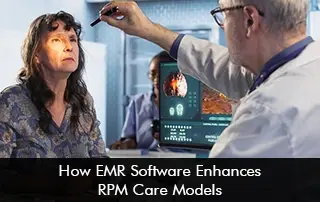
Remote Patient Monitoring with EMR Software has transformed healthcare delivery for the better. Healthcare providers can stay connected to their patients’ healthcare conditions through swift access to real-time data outside hospital settings. This provides a proactive approach and reduces hospital readmissions and enhances chronic care management. RPM integration into EHR Software gets robust and efficient as it opens a gateway to helpful patient insights and improves patient engagement.
Why EMR Software Integration is Important in RPM
Modern EHR Systems like eClinicalWorks EMR Software make RPM data more meaningful and accessible. Without this seamless integration, the Remote Patient Monitoring data is in different systems, which makes it harder for care teams to use it. With the valuable integration, RPM data is easily available in the Electronic Medical Records (EMR) Software. So now clinicians have swift access to real-time insights. Through the data available, errors in documentation are reduced. Having data from RPM tools means that clinicians can be alerted to any abnormal vitals, so quick action can be taken. This can save patient lives, which is the purpose of healthcare.
Vendor Examples that Propel Remote Patient Monitoring and EHR Integration
The cloud-based EMR Software of athenahealth EHR Software supports smooth RPM data integration with APIs and third-party partners. In the clinical chart, providers can view RPM vitals and insights. With the Patient Portal platform and HIPAA-compliant messaging, patient engagement is supported, which can lead to better patient satisfaction throughout a patient’s journey.
Talking about other EHR Software vendors, Epic Systems has integrated remote patient monitoring (RPM) features by working with various device platforms. This integration feeds data into their Chronicles database. Healthcare providers can then use this information to see trends, set off alerts through BestPractice Advisories, and share these insights with other care teams using Care Everywhere. Epic also offers support for RPM billing processes, helping medical practices secure the revenue they’re entitled to.
eClinicalWorks EMR Software has RPM streamlined by connecting it directly into the EHR System. Patients who use Remote Patient Monitoring devices at home, those readings are sent into their medical records directly, which can be accessed by clinicians. The Electronic Medical Records Software vendor turns the incoming data into easy-to-understand trends and alerts. Rather than just seeing individual numbers.
This enables clinicians to spot patterns that develop over time, like gradually increasing blood pressure or fluctuating glucose levels. Plus, the system automatically sends reminders and alerts whenever readings fall outside normal ranges, giving care teams the chance to intervene early and stop potential issues before they escalate.
The Road Ahead – RPM with EMR Software
Since value-based care is taking the stage, major EMR Software vendors in the United States are working harder for better RPM success. They are leveraging real-time data, smoother workflows, and patient engagement solutions, making EMR software-driven RPM take a more hands-on approach in healthcare settings. This can greatly improve patient outcomes and reduce costs.