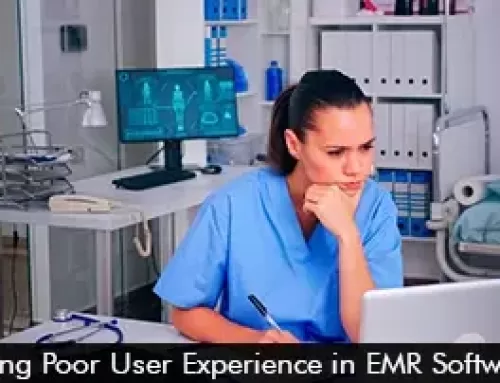

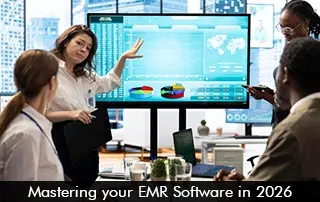
To make the most of your EMR Software in 2026, users need to become super users. The point of EHR Software technology is to empower providers so they focus on their passion for caring for patients. If providers are spending more time on the EMR System and less time with their patients, then clearly they will be frustrated and will see the software as a burden. If you are an average user, it is the right time to master your EMR Software by shaping the system around your workflows and requirements.
Why Does Mastering Your EHR Software Matter?
Electronic Medical Records (EMR) Software has evolved over the years from being digital storage cabinets to being the backbone of clinical processes, billing, patient engagement, and patient scheduling.
When EHR Systems are used effectively, practices can reap the benefits of:
- Better productivity and optimization.
- Improved patient safety levels.
- Streamlined care coordination between specialists.
- User satisfaction and a reduction in clinician burnout.
Also, when users don’t know how to use EMR Software technology, then they become a source of stress, which can lead to inefficiencies and can even have repercussions on patient care.
Using EMR Software Smartly in 2026
In this blog, we have shared some practical tips that can actually work and will make providers, practice managers, nurses, and front-desk staff super users of EHR Software.
The first and foremost tip is to customize your EMR System according to preference, workflows, and practice requirements. To become a superuser, it is best to build custom templates, leverage shortcuts and macros, and personalize dashboards. A pro tip is to spend an hour or two personalizing just one workflow per week.
To get the complete hang of the Electronic Medical Records Software, users need to master shortcuts and automation. Modern EMR Software vendors like eClinicalWorks EHR Software, Epic Systems, and more provide voice dictation tools and CDS tools. Users should focus on these features to streamline documentation and clinical tasks.
EHR Software training matters the most. Training is not a one-time solution; it is an ongoing investment. EMR Software providers understand this and offer robust and interactive training modules. Vendors now offer role-based training, interactive simulations, and on-demand video learning. This can improve user confidence with the EMR System. The National Electronic Health Records Survey suggests that training is a driving force to reduce frustrations and make providers more satisfied with the electronic medical records software.
Learn to collaborate with the EMR Software vendor; it is all about teamwork and working together to make the platform better and more intuitive. As a user, you can request customizations and report inefficiencies so issues can be prioritized and fixed.
What EMR Software Vendors are doing in 2026?
Both users and vendors are making efforts this year. In 2026, advanced EMR Systems vendors like athenahealth EMR Software and AdvancedMD EHR Software will allow scalable configurations and regular system updates that can help EHR Software technology become more adaptable. This year, providers, nurses, and care teams need to stay engaged with updates and training methodologies to become real masters of EMR Software.