

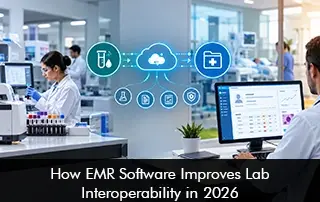
For years, seamless data sharing seemed like a promise that didn’t materialize. With greater focus on interoperability, APIs, and FHIR, EMR software vendors are making strides to connect clinical workflows with lab systems. Accurate lab results in the patient’s chart are critical for diagnosis, monitoring chronic conditions, and making the right care choices. In 2026, EHR software is revolutionizing lab interoperability. This fast, real-time connectivity matters for providers and patients alike.
What is lab interoperability in EMR software?
Lab interoperability in electronic medical records software is when the system can efficiently share, exchange, and interpret laboratory information across different solutions. For example, if a doctor has ordered a particular blood test for their patient, then the request is sent electronically to the lab. Once the lab processes the sample, results arrive directly in the EHR software. These results are available in the patient’s chart so the provider can easily review them.
Have you noticed that with robust lab interoperability, the whole process is made simpler and faster? With data silos and fragmented systems, the situation would have been pretty different. Staff would have to download PDFs and may even need to contact labs to get the missing information. Whether the lab is in the hospital or operating as a separate diagnostic provider, results can be exchanged swiftly, so patient care is not delayed.
How is Lab Interoperability improving in 2026?
One of the main challenges to lab interoperability is that different systems speak different languages. This can make it difficult to comprehend and share lab results correctly. In 2026, modern EHR software vendors like athenaOne EMR software and Epic Systems are utilizing standards that can help healthcare organizations share data seamlessly. These are mainly via HL7 and FHIR.
Furthermore, standardized coding systems are also playing a vital role in lab interoperability. LOINC and SNOMED CT ensure systems can identify and understand the information from the lab. These efforts are a great way to help clinicians access and comprehend results that can have an impact on health outcomes.
In the past, every hospital or clinic had to build a separate, custom digital bridge to every single lab they worked with—a slow, expensive nightmare. Fortunately, things have changed for the better with EMR software vendors connecting directly to HIE Hubs. Such as Carequality and CommonWell. With just this one connection, doctors can instantly send tests and receive results from hundreds of different labs nationwide without any extra setup headaches.
Benefits of EMR Software Lab Interoperability
The advantages of EHR software interoperability extend across the care continuum, benefiting everyone involved in the patient care process. The most obvious advantage is that physicians can act quickly, as they have instant access to lab results inside the patient’s chart. This creates an opportunity for faster and more accurate diagnosis.
It is a hard and astonishing reality that unnecessary duplicate testing can cost the US healthcare system billions of dollars yearly. With improved lab interoperability with EMR systems, the issue of duplicate testing can be eliminated. Earlier, data from faxed lab reports needed to be entered manually. This always had a risk of transcription errors. With electronic lab reports and results available in the EMR software, the issue is resolved and even reduces administrative burdens.
In 2026, lab interoperability is not an afterthought but a crucial requirement to support holistic patient care. EHR software vendors and the US government are making efforts to support seamless lab data exchanges. These initiatives will also continue to play a vital role in population health management to track trends and monitor progress efficiently.