
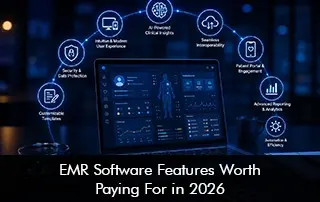
In 2026, practices are not selecting EMR software based on the most features and functionality. The features present should make an impact on the way clinicians and staff members work to enhance patient care and experiences. At times, some features in the EHR software demo will look impressive, but in reality they make little difference. It is important to know which features are worth paying for this year. These functionalities can streamline administrative tasks, improve user satisfaction, and boost revenue cycle management.
Ambient AI Integration in the EMR Software
Many providers have updated their electronic medical record software due to the lack of practical AI solutions for documentation. Ambient AI documentation is a critical component in modern EMR systems. Ambient AI is designed to listen to patient and provider conversations and automatically convert them into clinical notes. Later, the clinician can make changes if needed. athenaOne EMR software is a good example of ambient AI functionalities available inside its platform. The vendor announced this year that its native-AI functionalities will be available to 170,000 clinicians. AI is worth paying for, especially for busy providers who spend a significant amount of time on charting tasks. When tedious documentation is automated, the chances of physician burnout are also reduced.
Interoperability That Works
Interoperability in EMR software has been on the wish list for years. In 2026, users should go for an EHR platform that leverages data exchange standards like FHIR. Robust interoperability allows different systems to connect and share data swiftly. This capability ensures smooth care coordination, which is necessary for high-quality patient care. Epic Systems and Oracle Health EMR software have taken proactive steps to provide users with an interoperable environment. Interoperability is worth paying for, especially for hospitals and multi-specialty groups that need to exchange patient records with outside specialists.
Revenue Cycle Management Tools in EMR Software
In 2026, practices should aim for EMR software with comprehensive functionalities. To maintain strong financial health, the EHR system should have revenue cycle management features. This streamlines billing processes and ensures faster reimbursements. Users should look for features like automated eligibility verification, charge capture, claim scrubbing, coding assistance, and payment collection tools. RCM features will provide value since they can reduce manual work and even improve collections.
Mobile Access
Clinicians are not tied to their work desk all day and hence require flexibility through mobile EMR software. This functionality empowers providers to stay ahead of their schedules as they work between hospitals, exam rooms, and different floors. Physicians can review charts, communicate with patients, and handle documentation tasks from their smartphones. Modern healthcare requires a mobile app that can help clinicians manage their work efficiently throughout the day.
EMR Software Security Tools
Security is non-negotiable, and vendors cannot compromise on it. Healthcare organizations need to ensure that the EHR software uses role-based access, audit trails, data backup, and encryption. These security protocols are obligatory to protect sensitive patient information from cyberattacks.
This year, it makes sense to pay more for EMR software if the extra features enhance clinical workflows, increase income, save time, or make information easier to utilize.