
In 2026, healthcare is becoming more connected than ever. As patients see specialists, remote healthcare providers, primary care clinics, labs, pharmacies, and hospitals, they need to rely on interoperable EMR software. Without a linked ecosystem, providers can face the issue of duplicate tests, communication gaps, and delays in patient care.
Interoperability in an EHR system is critical to create an environment where patient data can be shared seamlessly and securely across different platforms. This is especially essential to make way for care coordination and ensure care teams are on the same page. Healthcare organizations are prioritizing interoperable platforms as value-based care and remote monitoring are on the rise.
What is interoperable EHR software?
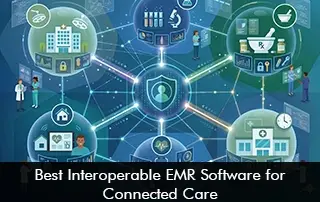
An interoperable electronic medical records software is designed to exchange patient health information across various healthcare platforms, organizations, and software solutions. An interoperable EMR Software has the ability to integrate with labs, pharmacies, and imaging systems. The platform can also connect with telemedicine software to support effective remote care. An interoperable EHR software vendor uses robust data exchange standards such as FHIR and HL7.
Top 3 Interoperable EMR Software Vendors for Connected Healthcare Delivery in 2026
Epic Systems
The Epic EMR Software platform outshines large healthcare systems with an extensive and strong interoperability ecosystem for secure and free-flowing data sharing. Epic Systems has taken proactive steps to enhance telehealth integrations and hospital-to-hospital data exchange. The vendor stands out because of its Care Everywhere interoperability network and AI-propelled clinical workflows. Via the Epic software providers, specialists, and nurses can easily coordinate care for high-quality patient care.
athenahealth EHR Software
Multi-specialty clinics and independent providers can greatly benefit from the interoperable platform of athenaOne EMR software. The solution is popular because of its cloud architecture and smooth integration functionalities. The athenaOne platform can support real-time data exchange and offers supreme ambulatory care connectivity.
MEDITECH Expanse
The MEDITECH EHR system has created an interoperable ecosystem with the power of cloud and FHIR capabilities. Community hospitals can benefit from secure and real-time data sharing between specialists. The Traverse Exchange Interoperability Network can provide clinicians a complete view of patient information, irrespective of where the patient has received care. This creates an avenue to offer holistic and safe healthcare delivery.
Real Benefits of Utilizing an Interoperable EHR Software
- Different specialists can easily coordinate care and communicate without a hitch.
- An interoperable EMR system automates data exchanges, which can reduce manual documentation and duplicate data entry for efficient and error-free workflows.
- Providers can feel empowered as they have access to accurate patient histories, information related to allergies, etc.; this can improve patient safety levels.
- Robust interoperability can support value-based care performance.
- The swift access to patient data enables clinicians to make informed and accurate clinical decisions at the point of care.
Interoperability no doubt brings great advantages for healthcare as a whole; however, there are certain challenges related to data standardization issues, security risks, and integration costs in 2026. However, increased importance to cybersecurity and strict standardization frameworks and laws in the USA can help vendors advance towards interoperable EMR Software solutions.